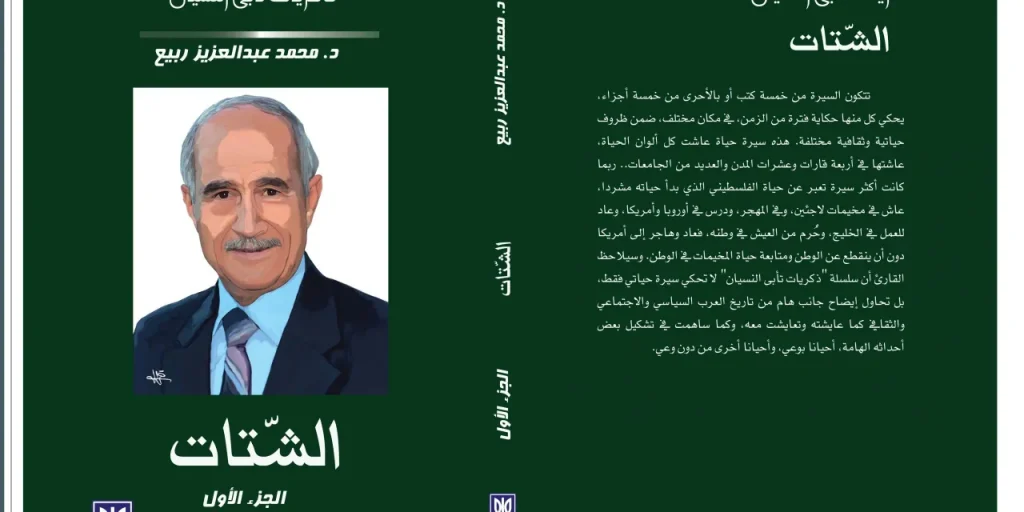
The fourth episode: the book (Memories that Refuse to Forget) by Dr. Muhammad Rabi`
Selected by Nazik Damra
The village of Yazour, which borders the city of Jaffa and is only five kilometers away from its charming sea, is located on the international road that connects Jaffa with Jerusalem, passing through the city of Ramla. The population of Yazour reached 4,675 in 1948. There, in Yazour, was my first stop, where I was born. And the buds of my childhood that were violently uprooted were formed before they could blossom… They were uprooted when Jewish terrorist gangs brutally confiscated them. Those gangs came to our house on the coldest, blackest, and rainiest nights of winter to steal my childhood from me before the advent of spring and the advent of the flowering season. And when they confiscated my childhood, those criminal gangs ruled my memories to be banished out of sight in one corner of my conscience, where I left them drowning in a sea of pain, sorrow, loss and oblivion. But the subconscious mind had kept a vivid picture of those memories, and when the shock awakened it from its slumber after twenty years in the woods of Gatlinburg, it showed me the treasures it had, and allowed me to rediscover it, live it, and reflect on its meanings and through it. The process of the Zionist invasion caused, out of nowhere, to obliterate Yazur’s experience, and suppressed my love for her and the orange orchards, orange blossoms, fig and guava bushes that I climbed and raced with the birds to pick their fruits… those birds I fell in love with so much and became my love for them and my longing to truly see them again He refuses to forget, and an experience that cannot be erased from memory or conscience. With the theft of my childhood and the confiscation of my memories, the escape from the house came in the darkness of the night, under the shadows of the smoke of deadly bombs, heavy rains, and terrifying storms that prevented us from seeing the road. The escape from the house came as part of the campaign of ethnic cleansing launched by the Jewish gangs in the wake of the Partition Resolution in 1947, which caused us to lose everything material that my father had collected in his life, every stone he built with his own hands and the sweat of his brow, and every vegetable seedling, fruit tree, and fragrant rose that he nurtured. with his heart and give her a part of his soul. In the confusion of escaping, and because of the cruelty of terrorism, the fear of the moment, the shock of exile, the torment of alienation, and the pain of misery and homelessness, my father forgot and my mother forgot my date of birth and the date of birth of my brothers and sisters.
Yazour was a dense garden of orange trees, lemons, and other citrus fruits, and passers-by in its streets and among its orchards smelled the aroma of lemons and were overwhelmed by its fragrance, accompanied by its fragrance as they walked…west on the road to Jaffa and its sea inhabited by the best types of fish, or east on the road to the village Beit Dajan and from there to the village of Wadi Hanin in the south, or east to the village of Sarafand to reach the cities of Ramla and Lod, or north on the road leading to the village of Selma and from there to the villages of Sakih, Al-Khairiya, Kafr Ana, Al-Abbasiya and others. And in the beginning of spring every year, the red tenderness flooded the hills of Yazur, and butterflies in love with the flower and its nectar invaded it from all over the world. Colorful butterflies used to travel their entire lives across the oceans, mountains, plains and valleys to enjoy the tenderness of love and the color of love in its cheeks, and to sip its nectar that prolongs the life of every butterfly that steps on the land of Yazour and drinks from its fresh water… that water that heals every sick person and purifies every heart and sin.
My grandmother Hassan (Hassan), my father, and my uncle had many Jewish friends, most of whom came from Yemen, among whom was the Jewish Saadia, her young family, and her rabbi husband, whose skin color was close to the blackness of Africans. Saadia spoke Arabic fluently, and behaved like an Arab woman in terms of customs and traditions, being an Arab, even if she inherited Judaism from her ancestors. As the ancient history books indicate, and as some historians of the Hebrew state recently discovered, the origins of the Yemeni Jewish community go back to the Kingdom of Himyar, which converted to Judaism in the fourth century AD, and most of its inhabitants abandoned their religion when they adopted Islam as an alternative religion in the seventh century AD.
The Abu Rabie family and the Jewish Saadia family used to exchange visits and gifts continuously, especially on occasions and holidays, and when a member of the two families suffered from a health problem. In Saadia’s house in the “Agrobank” settlement, I tasted the taste of butter for the first time… The taste was so delicious and delicious that made me get used to it and eat it almost every morning with orange jam, until science discovered cholesterol, and learned about its harmful effects on the heart. What spoiled that delicious taste and prompted me in the seventies to stay away from eating butter altogether.
Through her friend Saadia, my grandmother Hassan became acquainted with Jewish merchants who used to trade in meat and slaughter cows on Saturdays, contrary to Jewish religious teachings, in collusion with her rabbi husband. And since it was almost impossible to complete the slaughtering operations in Jewish settlements, those merchants agreed with my grandmother to carry out the slaughtering and skinning operations on her modest farm, in return for good sums of money. The agreement with the Jewish merchants stipulated leaving some parts of the carcass, especially the head, legs, stomach and other internal intestines, for my grandmother to dispose of as she wished. And this is meat and fat that was desired by the people of Palestinian villages in general, which made my grandmother sell some of these things and give others away to neighbors, relatives and friends, and accumulate what she got in terms of income in pillows and pillows … My uncle Jumaa was the first and largest beneficiary of that money. Although my grandmother was generous to all those close to her and generous in giving alms to strangers, my father never asked her what money she had or how she spent it. When we arrived at Aqabat Jabr camp in early 1949, all that was left in my father’s pocket after a full year of moving around the diaspora stations inside Palestine was only three and a half piasters, to support a family of nine. Here came the role of my grandmother and the money she had saved to save us temporarily from the specter of hunger and need, and to help us overcome a fateful crisis.
My grandmother Hasan’s house, consisting of one room, a small kitchen, a front yard, and a chicken house, is located at the western end of the village near the agricultural settlement of “Nitter”. Our land was separated from that colony only by a relatively wide main street that linked that area to the international road. My grandmother, whom I called Siti, loved me very much and I spent two or more nights in her arms every week, and my father visited her almost every day. As for the neighboring colony of Niter, it was planted with many types of fruits, the most important of which were almond trees close to us, and the almond blossom and its fruits were very tempting, which prompted me in 1947, with my older sister Yusra and my brother Mahmoud, who is about a year and a half younger than me, to fool the family and sneak into the colony from under The fence made of barbed wire, and there we picked some soft almonds. Unfortunately for us that day, the Jewish guard of the colony, whose name was “Dodo”, saw us, which made him run towards us with his horse and whistle with its strong and terrifying sound. And this made us tremble with fear, freeze in place and start crying and screaming. However, my father was only dozens of steps away from us, so he came running with his gun in his hand when he heard the Dodo whistle and our screams. The father shouted at Dodo angrily and pointed the gun at him threatening to shoot. Dodo quickly backed away… He turned his horse’s face and galloped into the colony. My father cut some wires and took us out of the settlement, and punished us, after the terror had left our hearts, with what we deserved.
But the anger of my father, the slave Abu Rabi`, did not subside until he took revenge in his own way on that colony, its guard, and its settlers. On a subsequent visit to my grandmother’s house, we noticed the presence of a large bull near the wall of the settlement, which seemed to have escaped from its pen, which prompted my father to carry his gun on his shoulder and go towards the bull, while the father stood by the guard (Dodo) on the lookout, then three young men from the neighbors got up Those present at the site that day cut the barbed wire with large scissors, while Dodo watched what was happening from a distance without daring to blow his whistle as usual for fear of the consequences. Then they dragged the bull with difficulty and took it out of the settlement, where it was slaughtered and its meat distributed to relatives and neighbors.
Arab Thought Council
The fourth episode: the book (Memories that Refuse to Forget) by Dr. Muhammad Rabi`
Selected by Nazik Damra
The village of Yazour, which borders the city of Jaffa and is only five kilometers away from its charming sea, is located on the international road that connects Jaffa with Jerusalem, passing through the city of Ramla. The population of Yazour reached 4,675 in 1948. There, in Yazour, was my first stop, where I was born. And the buds of my childhood that were violently uprooted were formed before they could blossom… They were uprooted when Jewish terrorist gangs brutally confiscated them. Those gangs came to our house on the coldest, blackest, and rainiest nights of winter to steal my childhood from me before the advent of spring and the advent of the flowering season. And when they confiscated my childhood, those criminal gangs ruled my memories to be banished out of sight in one corner of my conscience, where I left them drowning in a sea of pain, sorrow, loss and oblivion. But the subconscious mind had kept a vivid picture of those memories, and when the shock awakened it from its slumber after twenty years in the woods of Gatlinburg, it showed me the treasures it had, and allowed me to rediscover it, live it, and reflect on its meanings and through it. The process of the Zionist invasion caused, out of nowhere, to obliterate Yazur’s experience, and suppressed my love for her and the orange orchards, orange blossoms, fig and guava bushes that I climbed and raced with the birds to pick their fruits… those birds I fell in love with so much and became my love for them and my longing to truly see them again He refuses to forget, and an experience that cannot be erased from memory or conscience. With the theft of my childhood and the confiscation of my memories, the escape from the house came in the darkness of the night, under the shadows of the smoke of deadly bombs, heavy rains, and terrifying storms that prevented us from seeing the road. The escape from the house came as part of the campaign of ethnic cleansing launched by the Jewish gangs in the wake of the Partition Resolution in 1947, which caused us to lose everything material that my father had collected in his life, every stone he built with his own hands and the sweat of his brow, and every vegetable seedling, fruit tree, and fragrant rose that he nurtured. with his heart and give her a part of his soul. In the confusion of escaping, and because of the cruelty of terrorism, the fear of the moment, the shock of exile, the torment of alienation, and the pain of misery and homelessness, my father forgot and my mother forgot my date of birth and the date of birth of my brothers and sisters.
Yazour was a dense garden of orange trees, lemons, and other citrus fruits, and passers-by in its streets and among its orchards smelled the aroma of lemons and were overwhelmed by its fragrance, accompanied by its fragrance as they walked…west on the road to Jaffa and its sea inhabited by the best types of fish, or east on the road to the village Beit Dajan and from there to the village of Wadi Hanin in the south, or east to the village of Sarafand to reach the cities of Ramla and Lod, or north on the road leading to the village of Selma and from there to the villages of Sakih, Al-Khairiya, Kafr Ana, Al-Abbasiya and others. And in the beginning of spring every year, the red tenderness flooded the hills of Yazur, and butterflies in love with the flower and its nectar invaded it from all over the world. Colorful butterflies used to travel their entire lives across the oceans, mountains, plains and valleys to enjoy the tenderness of love and the color of love in its cheeks, and to sip its nectar that prolongs the life of every butterfly that steps on the land of Yazour and drinks from its fresh water… that water that heals every sick person and purifies every heart and sin.
My grandmother Hassan (Hassan), my father, and my uncle had many Jewish friends, most of whom came from Yemen, among whom was the Jewish Saadia, her young family, and her rabbi husband, whose skin color was close to the blackness of Africans. Saadia spoke Arabic fluently, and behaved like an Arab woman in terms of customs and traditions, being an Arab, even if she inherited Judaism from her ancestors. As the ancient history books indicate, and as some historians of the Hebrew state recently discovered, the origins of the Yemeni Jewish community go back to the Kingdom of Himyar, which converted to Judaism in the fourth century AD, and most of its inhabitants abandoned their religion when they adopted Islam as an alternative religion in the seventh century AD.
The Abu Rabie family and the Jewish Saadia family used to exchange visits and gifts continuously, especially on occasions and holidays, and when a member of the two families suffered from a health problem. In Saadia’s house in the “Agrobank” settlement, I tasted the taste of butter for the first time… The taste was so delicious and delicious that made me get used to it and eat it almost every morning with orange jam, until science discovered cholesterol, and learned about its harmful effects on the heart. What spoiled that delicious taste and prompted me in the seventies to stay away from eating butter altogether.
Through her friend Saadia, my grandmother Hassan became acquainted with Jewish merchants who used to trade in meat and slaughter cows on Saturdays, contrary to Jewish religious teachings, in collusion with her rabbi husband. And since it was almost impossible to complete the slaughtering operations in Jewish settlements, those merchants agreed with my grandmother to carry out the slaughtering and skinning operations on her modest farm, in return for good sums of money. The agreement with the Jewish merchants stipulated leaving some parts of the carcass, especially the head, legs, stomach and other internal intestines, for my grandmother to dispose of as she wished. And this is meat and fat that was desired by the people of Palestinian villages in general, which made my grandmother sell some of these things and give others away to neighbors, relatives and friends, and accumulate what she got in terms of income in pillows and pillows … My uncle Jumaa was the first and largest beneficiary of that money. Although my grandmother was generous to all those close to her and generous in giving alms to strangers, my father never asked her what money she had or how she spent it. When we arrived at Aqabat Jabr camp in early 1949, all that was left in my father’s pocket after a full year of moving around the diaspora stations inside Palestine was only three and a half piasters, to support a family of nine. Here came the role of my grandmother and the money she had saved to save us temporarily from the specter of hunger and need, and to help us overcome a fateful crisis.
My grandmother Hasan’s house, consisting of one room, a small kitchen, a front yard, and a chicken house, is located at the western end of the village near the agricultural settlement of “Nitter”. Our land was separated from that colony only by a relatively wide main street that linked that area to the international road. My grandmother, whom I called Siti, loved me very much and I spent two or more nights in her arms every week, and my father visited her almost every day. As for the neighboring colony of Niter, it was planted with many types of fruits, the most important of which were almond trees close to us, and the almond blossom and its fruits were very tempting, which prompted me in 1947, with my older sister Yusra and my brother Mahmoud, who is about a year and a half younger than me, to fool the family and sneak into the colony from under The fence made of barbed wire, and there we picked some soft almonds. Unfortunately for us that day, the Jewish guard of the colony, whose name was “Dodo”, saw us, which made him run towards us with his horse and whistle with its strong and terrifying sound. And this made us tremble with fear, freeze in place and start crying and screaming. However, my father was only dozens of steps away from us, so he came running with his gun in his hand when he heard the Dodo whistle and our screams. The father shouted at Dodo angrily and pointed the gun at him threatening to shoot. Dodo quickly backed away… He turned his horse’s face and galloped into the colony. My father cut some wires and took us out of the settlement, and punished us, after the terror had left our hearts, with what we deserved.
But the anger of my father, the slave Abu Rabi`, did not subside until he took revenge in his own way on that colony, its guard, and its settlers. On a subsequent visit to my grandmother’s house, we noticed the presence of a large bull near the wall of the settlement, which seemed to have escaped from its pen, which prompted my father to carry his gun on his shoulder and go towards the bull, while the father stood by the guard (Dodo) on the lookout, then three young men from the neighbors got up Those present at the site that day cut the barbed wire with large scissors, while Dodo watched what was happening from a distance without daring to blow his whistle as usual for fear of the consequences. Then they dragged the bull with difficulty and took it out of the settlement, where it was slaughtered and its meat distributed to relatives and neighbors.
Arab Thought Council