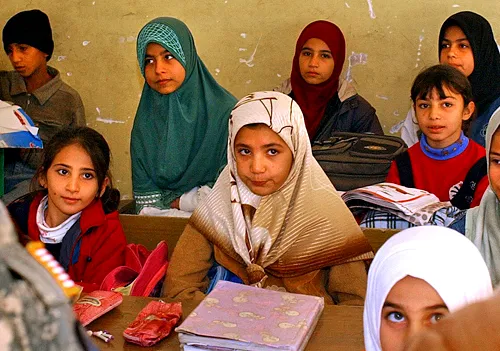
A modern vision for education Strategic challenges for education in the Arab countries
Dr.. Nabil Al-Athari,
Professor of International Business Strategies – Virginia International University
Foreword:
This paper attempts to provide a comprehensive view of the most important chronic strategic challenges facing and impeding the development of
education in Arab countries during the current decade. The paper follows the methodology of the strategic analysis of the mission environment in order to
crystallize a realistic vision that anticipates the future and presents some ideas on the possible role of the Arab Thought Council to advance
it to overcome what is possible of these challenges. The paper identified five main groups that summarize the intended challenges, and
the author does not claim that he was able to list and diagnose all the challenges in the contents of this brief paper.
The paper adopted a methodology based on the writer’s personal experiences in the academic field and in the field of
administrative reform, as well as the findings of some international institutions that worked in the Arab region.
Strategic challenges facing the development of education in Arab countries:
First: the quality of education and technology:
Although technology and its applications have become the main focus of the learning process, many educational institutions
generally use curricula that have not undergone fundamental changes or have undergone significant modernization or development since their establishment after achieving
political independence for some Arab countries in the middle of the twentieth century. This is what led to an unproductive educational process
that produced a poorly educated youth with little knowledge that did not suit the requirements and dynamism of the age.
The educational process often depends on the method of indoctrination, and is limited to outdated stereotyped methods, and witnesses continuous resistance to diversifying
the methods of education. In the same direction, technology and virtual education are rarely used in the educational process, and much of
the information that students receive remains theoretical science that has no connection to practical applications, while educational institutions focus on
higher education on non-scientific disciplines, with a ratio of two-thirds to one-third, and it seems clear that the masses of students avoid
mathematics, foreign languages, and the most complex sciences as much as they can.
In its response to the challenges in the Arab world, the International Labor Organization states that “certificates – issued by educational institutions in the Arab world – are often not recognized
at the international level.” Fundamental questions arise here about the
licensing bases approved for the establishment and continuation of educational institutions, about the evaluation systems for the performance of institutions, about
the seriousness of quality assurance systems, and about the real feasibility of many education reform projects. The answer to these
questions highlights the dangers represented in the spread of corruption in many educational institutions, the prevalence of the phenomenon of
private teaching, extortion of male and female students, and the weakness of the research structure and research culture.
Ego education:
The Gender Parity Index shows that the share of females is less than 40% in some
Arab countries, and the share of females in education decreases as we advance in the educational stages. The phenomenon is exacerbated in rural areas,
tribal areas and the poorest. The Canadian International Development Research Center (IDRC) reports on the Middle East
and North Africa also show that the weak participation of women in education leads to the disruption of a large part of society’s
cognitive energy and the exit of females from competition in the labor market, which leads to the weakening of the competitive capabilities of the Arab countries.
Social norms represented by concern about the prominence of females in the community, mixing and the dominance of the masculine tendency
in the decisions of thousands of Arab families contribute to preventing females from completing education at some stage, and these are the same reasons next to
Other economic and social reasons push families to expedite the marriage of minors, child labor, and
the violation of female economic rights.
Spending on education:
Arabs spend only 2% of the national product on education and scientific research, while developed countries spend about 18.504
%. The reasons for the weakness of Arab spending on education vary, some of them are economic related to poverty and indebtedness, and some of them are
related to the starting points of governments in the priorities of distributing the national product to the needs of the population and their view of education as a
luxury need when compared to security and food, and some of them are related to the necessity of governments to spend on combating terrorism,
displacement and migration.
The biggest challenge facing spending on education is related to demographic growth and the high percentage of children and youth in
Arab societies (reaching more than 40% in some countries), which makes meeting the requirements of
high-quality education a difficult requirement for many poor and highly indebted Arab countries, or makes them unable to catch up.
Education quality requirements imposed by global competition and international education standards.
Linking education to the needs of the market:
While the market has become in many parts of the world the real function that directs the compass of education to meet its needs, we find that
the idea of linking education to the needs of the market is based mostly on the personal guesses of the administrations of educational institutions or
is usually left to central planning in Arab countries. The continuation of education in offering outputs that do not meet the needs
of the market represents a huge waste of time and resources and a major factor in creating more unemployment.
The response of the International Labor Organization showed that graduates of schools, universities, and vocational education and training institutions
lack the skills required in competitive labor markets, while it appears that two-thirds of students are enrolled in studies.
Humanities and Social Sciences (literary major). In the same context, it appears that the hugeness of the public sector and its
haphazard polarization of educational outputs has destroyed the idea of learning in order to gain experience and the principle of merit. The
prevalence of a culture of indifference towards education and the collapse of the principle of fair competition:
Many of the harsh experiences that many Arab countries are going through have caused a spread of indifference towards the importance of
education for future generations. This includes what has been caused by wars, violence, and the dangers of the dominance of fundamentalist thought, and the results of that in terms of
displacement, migration and social woes.
The effects of poverty are no less. There is a danger in spreading this model of negative thinking towards education, which is reinforced by the patterns of authoritarian political systems.The feeling of individuals that competition
in their countries is not based on expertise and knowledge represents a strong motive.
For neglecting education and voluntary or forced involvement in the slope of corruption and nepotism.
Once again, the response of the International Labor Organization mentions that the percentage of young people who left education and without work is higher in
(% of Arab countries than in any other developing region in the world) 04. It also appears that the crude enrollment rate in universities
in Arab countries is less than 22%, while a decline in the wages of scientific competencies appears in many
educational institutions, which has produced disastrous results, including brain drain in search of appreciation and self-realization, or for economic
or other reasons related to fear for life.
Recommendations:
By virtue of its location near the centers of decision-making and knowledge momentum in the United States, the
Arab Thought Council can support any serious endeavors of Arab governments towards education reform, and urge those governments
To develop effective strategies and initiatives for the development of education, and to reform the legislative structure of education.
The Arab Thought Council can represent the bridge or the link to bridge the gap and open the way for the transfer of expertise,
opportunities and knowledge available through the launch of the American-Arab Dialogue Forum for the development of education, and the creation of
programs to train Arab education leaders in coordination with specialized American and international technical institutions.
It is important for the Council to coordinate with American media organizations directed to the Arab world to transfer
the voice of the Council and the flood of ideas and discussions to the center of benefit.
References:
The writer’s experiences in the field of education development since 2004
The Arab Organization for Education, Culture and Science, The Arab Strategy for the Development of Higher Education
UNESCO, Towards an Arab Space for Higher Education
Canadian International Development Research Center IDRC
A modern vision for education Strategic challenges for education in the Arab countries
Dr.. Nabil Al-Athari,
Professor of International Business Strategies – Virginia International University
Foreword:
This paper attempts to provide a comprehensive view of the most important chronic strategic challenges facing and impeding the development of
education in Arab countries during the current decade. The paper follows the methodology of the strategic analysis of the mission environment in order to
crystallize a realistic vision that anticipates the future and presents some ideas on the possible role of the Arab Thought Council to advance
it to overcome what is possible of these challenges. The paper identified five main groups that summarize the intended challenges, and
the author does not claim that he was able to list and diagnose all the challenges in the contents of this brief paper.
The paper adopted a methodology based on the writer’s personal experiences in the academic field and in the field of
administrative reform, as well as the findings of some international institutions that worked in the Arab region.
Strategic challenges facing the development of education in Arab countries:
First: the quality of education and technology:
Although technology and its applications have become the main focus of the learning process, many educational institutions
generally use curricula that have not undergone fundamental changes or have undergone significant modernization or development since their establishment after achieving
political independence for some Arab countries in the middle of the twentieth century. This is what led to an unproductive educational process
that produced a poorly educated youth with little knowledge that did not suit the requirements and dynamism of the age.
The educational process often depends on the method of indoctrination, and is limited to outdated stereotyped methods, and witnesses continuous resistance to diversifying
the methods of education. In the same direction, technology and virtual education are rarely used in the educational process, and much of
the information that students receive remains theoretical science that has no connection to practical applications, while educational institutions focus on
higher education on non-scientific disciplines, with a ratio of two-thirds to one-third, and it seems clear that the masses of students avoid
mathematics, foreign languages, and the most complex sciences as much as they can.
In its response to the challenges in the Arab world, the International Labor Organization states that “certificates – issued by educational institutions in the Arab world – are often not recognized
at the international level.” Fundamental questions arise here about the
licensing bases approved for the establishment and continuation of educational institutions, about the evaluation systems for the performance of institutions, about
the seriousness of quality assurance systems, and about the real feasibility of many education reform projects. The answer to these
questions highlights the dangers represented in the spread of corruption in many educational institutions, the prevalence of the phenomenon of
private teaching, extortion of male and female students, and the weakness of the research structure and research culture.
Ego education:
The Gender Parity Index shows that the share of females is less than 40% in some
Arab countries, and the share of females in education decreases as we advance in the educational stages. The phenomenon is exacerbated in rural areas,
tribal areas and the poorest. The Canadian International Development Research Center (IDRC) reports on the Middle East
and North Africa also show that the weak participation of women in education leads to the disruption of a large part of society’s
cognitive energy and the exit of females from competition in the labor market, which leads to the weakening of the competitive capabilities of the Arab countries.
Social norms represented by concern about the prominence of females in the community, mixing and the dominance of the masculine tendency
in the decisions of thousands of Arab families contribute to preventing females from completing education at some stage, and these are the same reasons next to
Other economic and social reasons push families to expedite the marriage of minors, child labor, and
the violation of female economic rights.
Spending on education:
Arabs spend only 2% of the national product on education and scientific research, while developed countries spend about 18.504
%. The reasons for the weakness of Arab spending on education vary, some of them are economic related to poverty and indebtedness, and some of them are
related to the starting points of governments in the priorities of distributing the national product to the needs of the population and their view of education as a
luxury need when compared to security and food, and some of them are related to the necessity of governments to spend on combating terrorism,
displacement and migration.
The biggest challenge facing spending on education is related to demographic growth and the high percentage of children and youth in
Arab societies (reaching more than 40% in some countries), which makes meeting the requirements of
high-quality education a difficult requirement for many poor and highly indebted Arab countries, or makes them unable to catch up.
Education quality requirements imposed by global competition and international education standards.
Linking education to the needs of the market:
While the market has become in many parts of the world the real function that directs the compass of education to meet its needs, we find that
the idea of linking education to the needs of the market is based mostly on the personal guesses of the administrations of educational institutions or
is usually left to central planning in Arab countries. The continuation of education in offering outputs that do not meet the needs
of the market represents a huge waste of time and resources and a major factor in creating more unemployment.
The response of the International Labor Organization showed that graduates of schools, universities, and vocational education and training institutions
lack the skills required in competitive labor markets, while it appears that two-thirds of students are enrolled in studies.
Humanities and Social Sciences (literary major). In the same context, it appears that the hugeness of the public sector and its
haphazard polarization of educational outputs has destroyed the idea of learning in order to gain experience and the principle of merit. The
prevalence of a culture of indifference towards education and the collapse of the principle of fair competition:
Many of the harsh experiences that many Arab countries are going through have caused a spread of indifference towards the importance of
education for future generations. This includes what has been caused by wars, violence, and the dangers of the dominance of fundamentalist thought, and the results of that in terms of
displacement, migration and social woes.
The effects of poverty are no less. There is a danger in spreading this model of negative thinking towards education, which is reinforced by the patterns of authoritarian political systems.The feeling of individuals that competition
in their countries is not based on expertise and knowledge represents a strong motive.
For neglecting education and voluntary or forced involvement in the slope of corruption and nepotism.
Once again, the response of the International Labor Organization mentions that the percentage of young people who left education and without work is higher in
(% of Arab countries than in any other developing region in the world) 04. It also appears that the crude enrollment rate in universities
in Arab countries is less than 22%, while a decline in the wages of scientific competencies appears in many
educational institutions, which has produced disastrous results, including brain drain in search of appreciation and self-realization, or for economic
or other reasons related to fear for life.
Recommendations:
By virtue of its location near the centers of decision-making and knowledge momentum in the United States, the
Arab Thought Council can support any serious endeavors of Arab governments towards education reform, and urge those governments
To develop effective strategies and initiatives for the development of education, and to reform the legislative structure of education.
The Arab Thought Council can represent the bridge or the link to bridge the gap and open the way for the transfer of expertise,
opportunities and knowledge available through the launch of the American-Arab Dialogue Forum for the development of education, and the creation of
programs to train Arab education leaders in coordination with specialized American and international technical institutions.
It is important for the Council to coordinate with American media organizations directed to the Arab world to transfer
the voice of the Council and the flood of ideas and discussions to the center of benefit.
References:
The writer’s experiences in the field of education development since 2004
The Arab Organization for Education, Culture and Science, The Arab Strategy for the Development of Higher Education
UNESCO, Towards an Arab Space for Higher Education
Canadian International Development Research Center IDRC