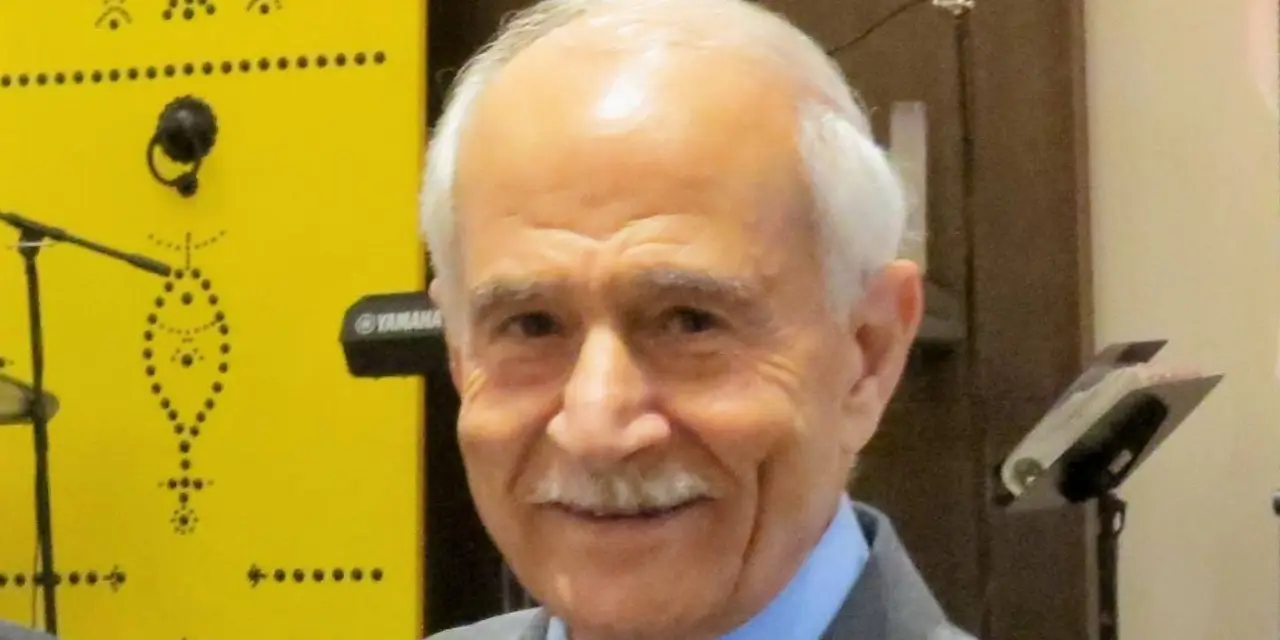
Dr. Tarek OmerDR.. TARIQ OMAR
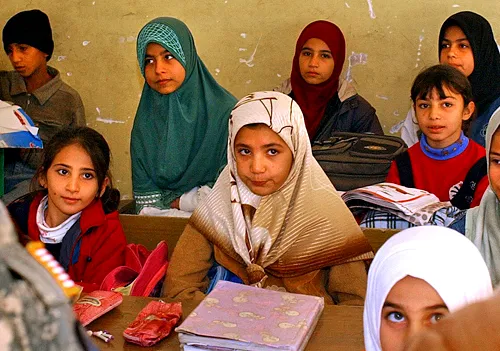
Ladies and Gentlemen – Firstly, I am pleased to speak among this honorable gathering of those interested in the concerns and aspirations of our Arab nation, and secondly, I am pleased to talk to you about something that I consider a necessity for life and a condition for a decent future for this ancient nation, which is education. I consider education as part of education, for there is a lot of organic interdependence between them and mutual influence, so that it becomes difficult for one to develop by itself without a similar development in the other.
There are two levels of dealing with this matter, which can be classified as follows:
The first level (academic and educational)Here we talk about the curricula and their contents, the number of days and hours of study per year, teaching methods and how to qualify teachers, and methods of evaluating the extent to which students absorb information and the extent of its impact on their way of thinking and dealing with various scientific and life matters. These are things that specialists in the field of education know well. Fortunately, we have many qualified Arab experts in this field, and they already have many serious studies, and they can be used to develop this level of education. Also, the challenges of this level are the same as the challenges of other peoples, as there is nothing related to a specific specificity of the Arab nation, and then we can of course benefit from the experiences of other countries that have achieved outstanding success in the past, such as Germany and the Scandinavian countries, or those that rose rapidly during the past few decades and education was the main engine for its renaissance, such as South Korea and Southeast Asian countries.
The second level (cultural and intellectual)It is the most important and the most difficult, in my view, because it directly intersects with the cultural and intellectual characteristics that characterize our Arab nation alone, and the desired reform here intersects with some aspects of the prevailing religious culture, especially those that are presented to children at an early age, and may remain entrenched in their minds throughout their lives. I will talk first about the goal of education, which must be clear to everyone and categorically, “It is a continuous and continuous effort through which the student learns how to think and analyze things with sound scientific logic, according to the mechanisms of abstract scientific research,” and it is never a means to memorize an amount of information that one would repeat at another time. To achieve this, we have to encourage a culture of questions versus a culture of possessing the absolute truth, a culture of doubt versus a culture of certain belief in what the predecessors said. Here we will have to confront some wrong religious ideas that are presented to the child at an early stage, ideas that claim that the religious text possesses the absolute truth and has all the answers to the challenges of the present and the future! This greatly reduces the student’s passion for serious research to know the secrets of nature and the universe, through the deep research study of the natural and human sciences – a study whose main motive is to doubt the aforementioned sciences and ideas, and to believe in the possibility of developing them, or even completely nullifying them and coming up with something better than them. We should make it clear to the student, from an early age, that the religious text presents a vision of belief and a methodology for worship. As for the affairs of life, we should study and deal with them only through solid and abstract scientific research methods. This greatly reduces the student’s passion for serious research to know the secrets of nature and the universe, through the deep research study of the natural and human sciences – a study whose main motive is to doubt the aforementioned sciences and ideas, and to believe in the possibility of developing them, or even completely nullifying them and coming up with something better than them. We should make it clear to the student, from an early age, that the religious text presents a vision of belief and a methodology for worship. As for the affairs of life, we should study and deal with them only through solid and abstract scientific research methods. This greatly reduces the student’s passion for serious research to know the secrets of nature and the universe, through the deep research study of the natural and human sciences – a study whose main motive is to doubt the aforementioned sciences and ideas, and to believe in the possibility of developing them, or even completely nullifying them and coming up with something better than them. We should make it clear to the student, from an early age, that the religious text presents a vision of belief and a methodology for worship. As for the affairs of life, we should study and deal with them only through solid and abstract scientific research methods.
Another thing that I find very dangerous is how superficial religious culture is used to evaluate the behavior of children and adults alike, that culture that reduces religion to the duality of permissible and forbidden, heaven and hell when trying to evaluate people’s behavior. When it is said to the child, “Do this in order to enter Paradise” and “Do not do this in order to avoid the torment of the Fire,” we devote several serious matters to him:
1. This equation of encouragement or intimidation is an equation with only two parties: the child and God, and there is no mention of the society in which he lives or the country as a whole! This is what perpetuates selfishness and individualism in the child’s soul from a young age and makes him only care about his personal interest. Perhaps this explains to us why this child does not care much about the cleanliness of the school and the street, and does not care about disturbing others or taking into account their circumstances. Can we then be surprised why the Arabs who live in the West fail in any collective institutional work! Despite the genius of most of them as individuals.
2. The formula of enticement, “Do this to enter Paradise,” urges him to do good or right, so that only he can benefit! While the people are to teach him to love the right thing for himself; Because doing the right thing will benefit the whole society and the country, and then he will also benefit, as well as his close family. That is, it is necessary to inculcate in the mind of the student, at all stages of education, that his interest is in the interest of society and the country and is never isolated from them.
3. The formula of intimidation, “the fear of the torment of the Fire,” perpetuates fear in him from childhood, and even cowardice. Even when he commits himself and refrains from making a mistake, he does so out of concern for his own safety and not out of concern for the safety of society. There is a big difference between those who live in one place, but with the mentality of isolated islands, in which a person only thinks of himself or his small family, and those who live as one bloc in a cohesive society, each of whom performs his role – integrated with the others – for the benefit of the whole community. Only when we reach this last state can we say that we live in a national state that has the ingredients for progress and success.
And there is a final and important word that I would like to clarify – I am not one of those who attack religion in the first place, or demand its complete exclusion from the public sphere; On the contrary, I fully understand the importance of religion for the vast majority of our compatriots, and I even say that religion can – and should – be a catalyst for goodness, love and progress. And I quote here a wonderful sentence by Dr. Wael Farouk (a young Egyptian thinker) in which he says: There is a central value of religion, around which the rest of the other values revolve. Anyone who follows the history of mankind will notice that when the pivotal value was “beauty,” religion was the catalyst for all positive energies and an inspiration for progress and happiness.
Thank you, and you are always welcome
Dr.. Tariq Omar
McLean, VA – January 27, 2019
Dr. Tarek OmerDR.. TARIQ OMAR
Ladies and Gentlemen – Firstly, I am pleased to speak among this honorable gathering of those interested in the concerns and aspirations of our Arab nation, and secondly, I am pleased to talk to you about something that I consider a necessity for life and a condition for a decent future for this ancient nation, which is education. I consider education as part of education, for there is a lot of organic interdependence between them and mutual influence, so that it becomes difficult for one to develop by itself without a similar development in the other.
There are two levels of dealing with this matter, which can be classified as follows:
The first level (academic and educational)Here we talk about the curricula and their contents, the number of days and hours of study per year, teaching methods and how to qualify teachers, and methods of evaluating the extent to which students absorb information and the extent of its impact on their way of thinking and dealing with various scientific and life matters. These are things that specialists in the field of education know well. Fortunately, we have many qualified Arab experts in this field, and they already have many serious studies, and they can be used to develop this level of education. Also, the challenges of this level are the same as the challenges of other peoples, as there is nothing related to a specific specificity of the Arab nation, and then we can of course benefit from the experiences of other countries that have achieved outstanding success in the past, such as Germany and the Scandinavian countries, or those that rose rapidly during the past few decades and education was the main engine for its renaissance, such as South Korea and Southeast Asian countries.
The second level (cultural and intellectual)It is the most important and the most difficult, in my view, because it directly intersects with the cultural and intellectual characteristics that characterize our Arab nation alone, and the desired reform here intersects with some aspects of the prevailing religious culture, especially those that are presented to children at an early age, and may remain entrenched in their minds throughout their lives. I will talk first about the goal of education, which must be clear to everyone and categorically, “It is a continuous and continuous effort through which the student learns how to think and analyze things with sound scientific logic, according to the mechanisms of abstract scientific research,” and it is never a means to memorize an amount of information that one would repeat at another time. To achieve this, we have to encourage a culture of questions versus a culture of possessing the absolute truth, a culture of doubt versus a culture of certain belief in what the predecessors said. Here we will have to confront some wrong religious ideas that are presented to the child at an early stage, ideas that claim that the religious text possesses the absolute truth and has all the answers to the challenges of the present and the future! This greatly reduces the student’s passion for serious research to know the secrets of nature and the universe, through the deep research study of the natural and human sciences – a study whose main motive is to doubt the aforementioned sciences and ideas, and to believe in the possibility of developing them, or even completely nullifying them and coming up with something better than them. We should make it clear to the student, from an early age, that the religious text presents a vision of belief and a methodology for worship. As for the affairs of life, we should study and deal with them only through solid and abstract scientific research methods. This greatly reduces the student’s passion for serious research to know the secrets of nature and the universe, through the deep research study of the natural and human sciences – a study whose main motive is to doubt the aforementioned sciences and ideas, and to believe in the possibility of developing them, or even completely nullifying them and coming up with something better than them. We should make it clear to the student, from an early age, that the religious text presents a vision of belief and a methodology for worship. As for the affairs of life, we should study and deal with them only through solid and abstract scientific research methods. This greatly reduces the student’s passion for serious research to know the secrets of nature and the universe, through the deep research study of the natural and human sciences – a study whose main motive is to doubt the aforementioned sciences and ideas, and to believe in the possibility of developing them, or even completely nullifying them and coming up with something better than them. We should make it clear to the student, from an early age, that the religious text presents a vision of belief and a methodology for worship. As for the affairs of life, we should study and deal with them only through solid and abstract scientific research methods.
Another thing that I find very dangerous is how superficial religious culture is used to evaluate the behavior of children and adults alike, that culture that reduces religion to the duality of permissible and forbidden, heaven and hell when trying to evaluate people’s behavior. When it is said to the child, “Do this in order to enter Paradise” and “Do not do this in order to avoid the torment of the Fire,” we devote several serious matters to him:
1. This equation of encouragement or intimidation is an equation with only two parties: the child and God, and there is no mention of the society in which he lives or the country as a whole! This is what perpetuates selfishness and individualism in the child’s soul from a young age and makes him only care about his personal interest. Perhaps this explains to us why this child does not care much about the cleanliness of the school and the street, and does not care about disturbing others or taking into account their circumstances. Can we then be surprised why the Arabs who live in the West fail in any collective institutional work! Despite the genius of most of them as individuals.
2. The formula of enticement, “Do this to enter Paradise,” urges him to do good or right, so that only he can benefit! While the people are to teach him to love the right thing for himself; Because doing the right thing will benefit the whole society and the country, and then he will also benefit, as well as his close family. That is, it is necessary to inculcate in the mind of the student, at all stages of education, that his interest is in the interest of society and the country and is never isolated from them.
3. The formula of intimidation, “the fear of the torment of the Fire,” perpetuates fear in him from childhood, and even cowardice. Even when he commits himself and refrains from making a mistake, he does so out of concern for his own safety and not out of concern for the safety of society. There is a big difference between those who live in one place, but with the mentality of isolated islands, in which a person only thinks of himself or his small family, and those who live as one bloc in a cohesive society, each of whom performs his role – integrated with the others – for the benefit of the whole community. Only when we reach this last state can we say that we live in a national state that has the ingredients for progress and success.
And there is a final and important word that I would like to clarify – I am not one of those who attack religion in the first place, or demand its complete exclusion from the public sphere; On the contrary, I fully understand the importance of religion for the vast majority of our compatriots, and I even say that religion can – and should – be a catalyst for goodness, love and progress. And I quote here a wonderful sentence by Dr. Wael Farouk (a young Egyptian thinker) in which he says: There is a central value of religion, around which the rest of the other values revolve. Anyone who follows the history of mankind will notice that when the pivotal value was “beauty,” religion was the catalyst for all positive energies and an inspiration for progress and happiness.
Thank you, and you are always welcome
Dr.. Tariq Omar
McLean, VA – January 27, 2019